





Table of Contents:
Electric bike shoppers often face spec sheets full of numbers without context. Actbestbike organizes its lineup into distinct product lines, each built around a different motor output, battery size, and riding style. Comparing electric bike tiers across this range makes it easier to match a frame, motor, and tire style to an actual riding need rather than guessing from a photo.
Understanding Actbest’s Product Categories and Motor Tiers
Actbestbike groups its models by purpose rather than by a single spec sheet. Commuter-focused step-through frames sit alongside compact moped-style builds and higher-output all-terrain machines. Motor wattage climbs from 1200W peak in the commuter-oriented models up to 3000W peak in the dual-motor Striker Max, and that spread is the clearest way to compare electric bike tiers within the catalog. Battery capacity, top speed, and tire width shift alongside motor output, so the lineup reads more like a set of use-case categories than a simple ladder.
Core and Mars: Entry-Level Commuter E-Bikes
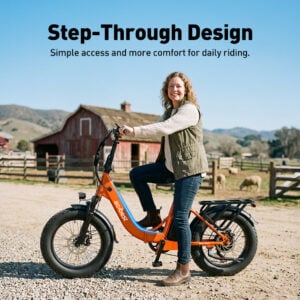
The Core ST 2.0 and Core 2.0 are built around a peak 1200W motor paired with a 10.4Ah built-in lithium battery, aimed at city commuting and daily errands. Actbestbike describes the Core ST 2.0 as offering up to 55 miles of PAS range, with a step-through frame meant to simplify mounting and dismounting. The Mars Folding Electric Bike shares a similar 1200W brushless motor but adds 3-inch fat tires and a folding frame, so it works as an all-terrain option that still folds down for storage.
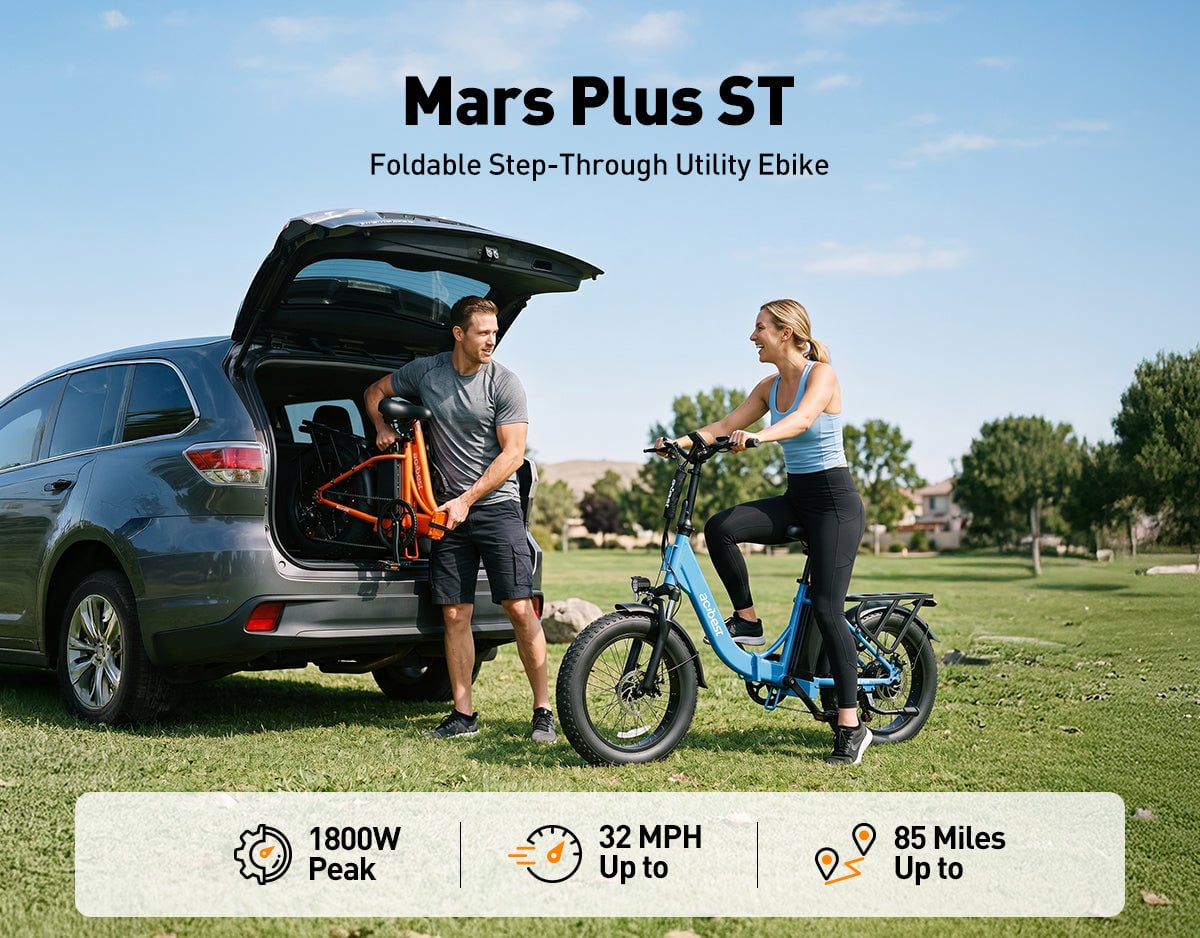
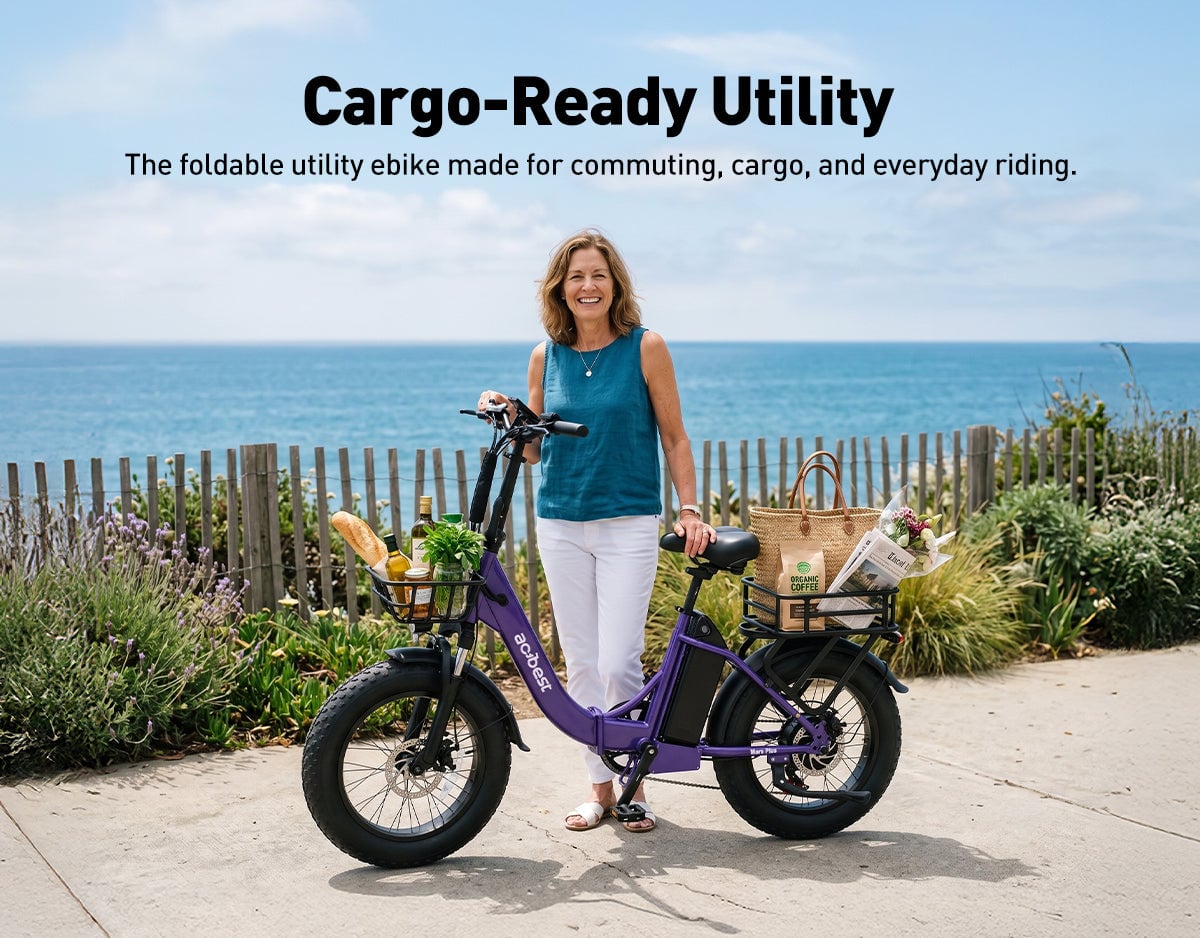
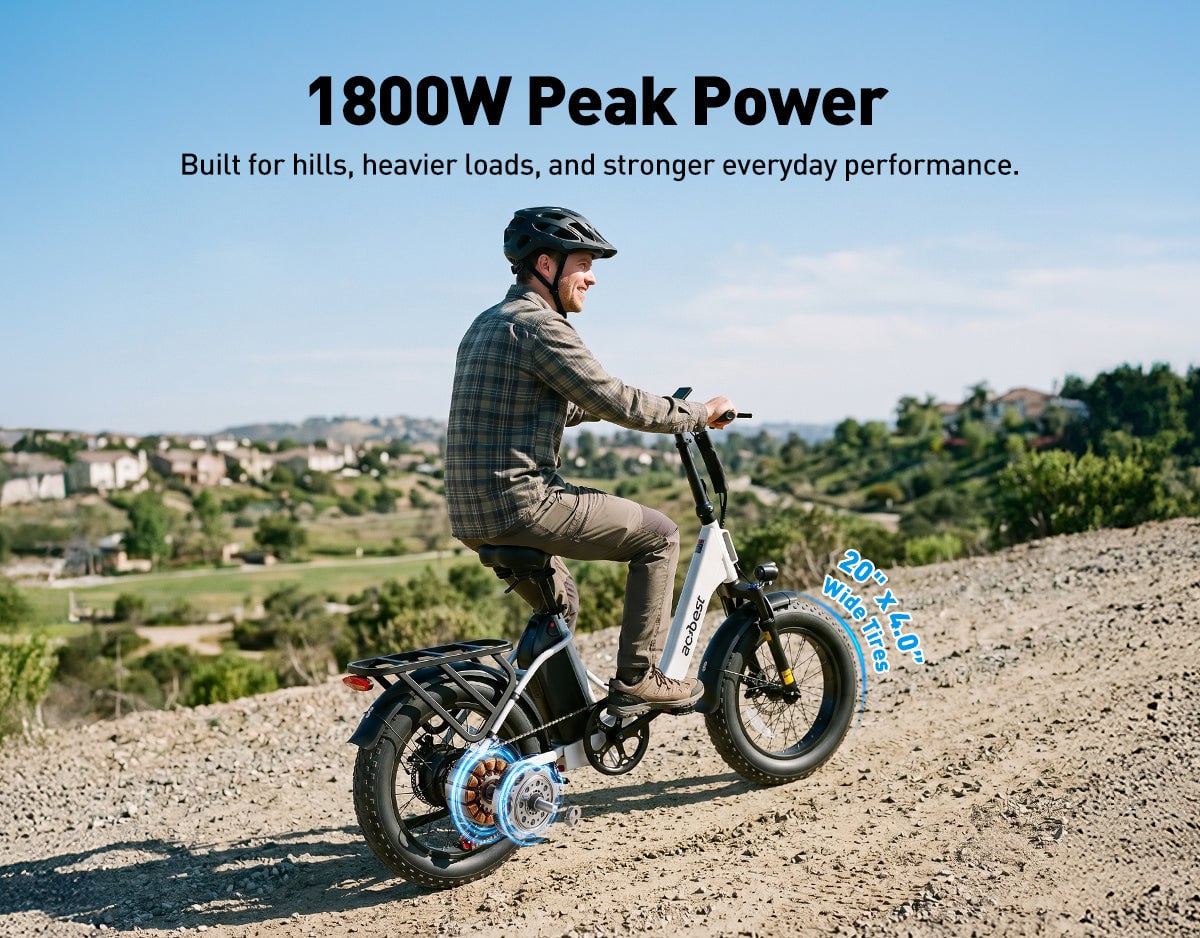
Mars Plus ST pushes this category toward utility, adding a foldable step-through frame with more cargo space for grocery runs or short car-trip replacement. These models sit at the more accessible end of the catalog, built for predictable commuting rather than speed or rough terrain. This group tends to suit riders focused on simple daily transport over long distances or rough surfaces.
Blaze and Blaze Plus: Compact Moped-Style Performance
Moving up in output, the Blaze line introduces a moped-style silhouette with 16″ x 4.0″ fat tires built for younger or smaller riders. Blaze pairs a 1500W peak motor with a 48V 13Ah battery for a top speed over 25MPH, and the Blaze is also available in multiple frame color options, while Blaze Plus steps up to a 2000W peak motor and a 48V 15.6Ah removable battery that extends range up to 75 miles and pushes top speed past 32MPH. That removable battery can be charged away from the bike itself, a detail neither Core model offers. Both models keep the same compact fat-tire frame, so the practical difference between them comes down to battery size and motor strength rather than frame design.
This makes the Blaze family a useful midpoint for shorter trips that still call for stronger acceleration than a basic commuter model offers. Actbestbike markets Blaze toward teens and smaller riders specifically, pairing the fat tires with a frame sized for a more compact rider.
Striker Plus and Striker Max: High-Power All-Terrain Models
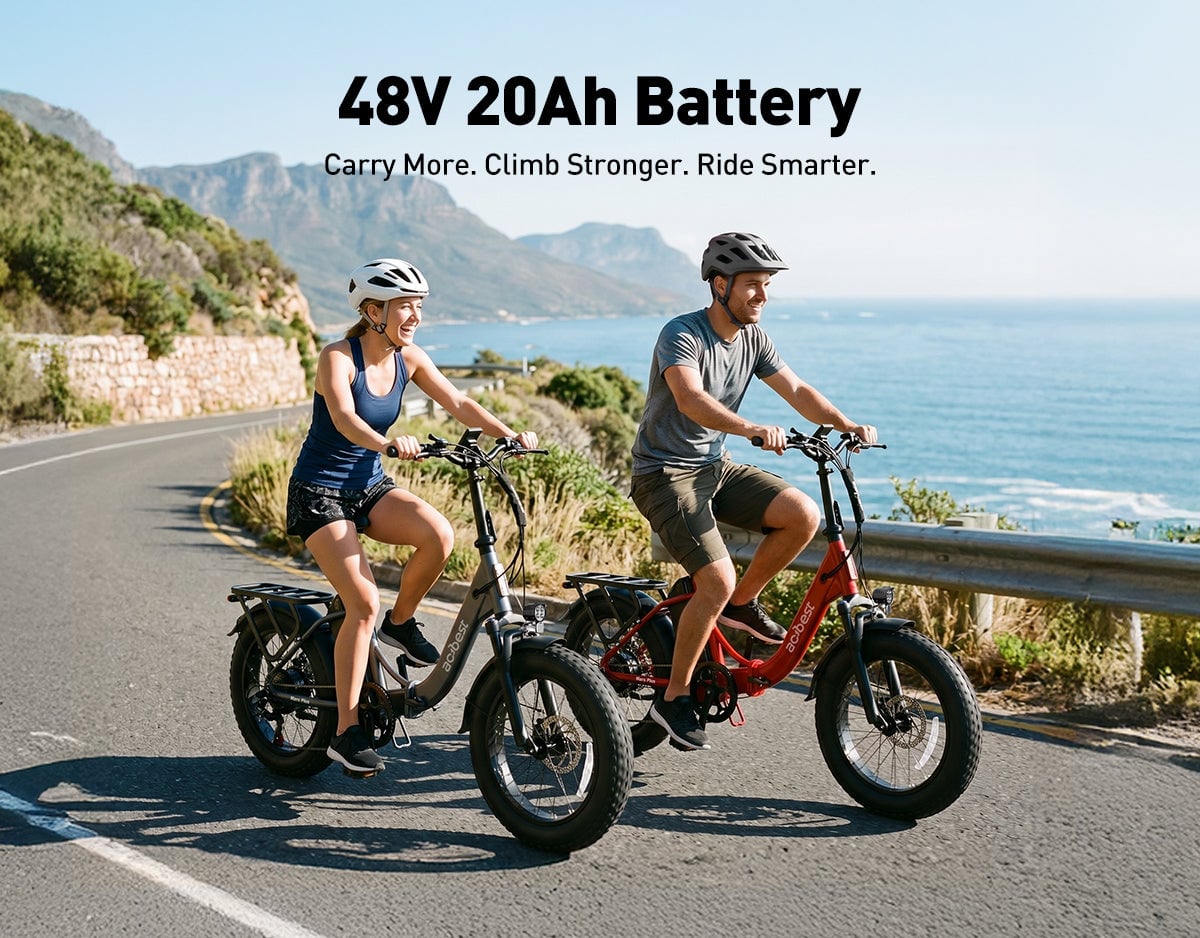
At the top of the moped-style range, the Striker Plus combines a 2000W peak motor and a 52V 20Ah battery for a stated max range up to 90 miles and a top speed over 38MPH, and it ships in several frame color options including red, aqua blue, and grey. It also adds hydraulic brakes along with wider 20″ x 4.0″ tires meant for sustained power rather than short bursts. Actbestbike positions this model for riders focused on long-distance performance and all-terrain traction rather than short errands.
The Striker Max goes further with a 3000W peak dual-motor AWD system, also paired with hydraulic brakes and the same 20″ x 4.0″ tire size. It targets young adults seeking stronger acceleration and all-terrain grip across rougher surfaces. Between the two, the Striker series marks the clearest high-output end of the range found across the catalog.
Fat Tire vs. Standard Frame Options Across the Range
Tire width is one of the more visible differences separating the models. The Core line and the Cozy commuter model use narrower or wider standard frame tires, with Cozy specifically running 24″ x 3.0″ wide tires and an 1800W peak motor for stability-focused city riding. Blaze, Blaze Plus, Striker Plus, and Striker Max all use fat tires, ranging from 16″ x 4.0″ up to 20″ x 4.0″, suited to uneven surfaces and off-road traction.
Foldable models like the Summit Plus Full Suspension Folding Fat Tire Electric Bike combine full suspension with a folding frame, aimed at riders who want cargo capacity and dependable range in a portable package. Actbestbike‘s mix of frame types means tire size and suspension, not just motor wattage, play a role in how each model handles different terrain.
Choosing by Rider Type and Use Case
Because the catalog spans commuter, teen-oriented, and high-performance categories, the practical difference between models often comes down to who is riding and where. A step-through commuter model suits short urban trips, while a fat-tire moped-style bike suits longer or rougher routes. The list below outlines how motor power, battery size, speed, and tire format shift across the main product lines.
- The Core ST 2.0 uses a peak 1200W motor with a 10.4Ah battery and offers up to 55 miles of PAS range.
- The Blaze runs a 1500W peak motor, a 48V 13Ah battery, a top speed over 25MPH, and 16″ x 4.0″ fat tires.
- The Blaze Plus increases output to a 2000W peak motor with a 48V 15.6Ah battery, reaching up to 75 miles of range and over 32MPH.
- The Striker Plus carries a 2000W peak motor, a 52V 20Ah battery, hydraulic brakes, and a top speed over 38MPH.
- The Striker Max adds a 3000W peak dual-motor AWD system paired with 20″ x 4.0″ tires and hydraulic brakes.
- The Cozy commuter model uses an 1800W peak motor with 24″ x 3.0″ wide tires and up to 80 miles of range.
Teen-oriented models like Blaze keep a compact frame size alongside fat tires, while the Striker series scales up frame and tire dimensions for larger riders. Foldable options such as Mars Plus ST and Summit Plus serve riders who need portability without giving up cargo space. Seen together, these differences show why electric bike tiers are better understood as separate use-case categories than a single scale from basic to advanced.
Each motor and battery combination in the catalog pairs with a frame style suited to a specific kind of riding, from short errands to longer all-terrain routes.