





Table of Contents:
My first attempt at embroidery was a complete disaster. I bought a cheap, all-in-one kit from a big box store, lured in by a cute botanical pattern. The thread, however, was a nightmare. It was dull, fuzzy, and seemed to shred if I even looked at it wrong. Every few stitches, I was battling a new tangle. I eventually gave up, convinced I just wasn’t cut out for the hobby.
It was only after complaining to a friend that I learned the truth: the problem wasn’t me, it was the materials. She handed me a skein of “310” DMC black floss, and the difference was immediate. The thread was smooth, strong, and had a soft, beautiful sheen. It was like trying to paint with high-quality oils after using craft-store acrylics. I learned that day that the thread isn’t just a supply; it’s the single most important tool in your project box.
The DMC Products That Build a Better Craft
- 117 Six-Strand Cotton Floss: This is the gold standard. It’s the 100% Egyptian cotton floss everyone from beginners to experts relies on. Its mercerized finish makes it smooth, strong, and tangle-resistant.
- DMC Etoile Floss: A blended thread that adds a delicate, non-metallic sparkle.1 It’s 73% cotton, so it behaves just like standard floss but gives a subtle, starry-night shimmer.
- DMC Light Effects Floss: The metallic range. This is your go-to for adding bright, reflective gold, silver, and pearlescent effects. It requires a bit more patience, but the brilliant shine is worth it.
- DMC Embroidery Kits: The perfect starting point. Unlike cheap kits, these come with high-quality Aida fabric, a proper needle, a clear pattern, and, most importantly, actual DMC floss.
The Core of the Craft: The Six-Strand Cotton Floss

When people talk about “DMC,” they’re almost always referring to the classic 117 Six-Strand Cotton Floss. This is the foundation of the brand and the entire craft. Each skein is made from 100% long-staple Egyptian cotton, which is what gives it its strength. The threads are then mercerized, a process that makes them smoother, more lustrous, and better at resisting tangles.2 It also makes the dye take more vibrantly, which is why DMC colors are so rich.
The “six-strand” part is the real magic for a stitcher. The thread is gently twisted together, but you can, and should, separate the strands. A beginner might use two or three strands for a standard cross-stitch on 14-count Aida. A more advanced embroiderer might use a single strand for fine, delicate “thread painting” or all six strands for a bold, chunky satin stitch. This ability to control the thickness of your line from a single skein is what gives you so much artistic control. It’s what makes this thread so versatile.
Beyond the Basics: Exploring the Specialty Threads
While the cotton floss is the hero, DMC’s real fun lies in its specialty threads. This is where you can add texture and light to your projects.
- Etoile Floss: This is, hands down, one of my favorite threads. It looks like standard cotton floss but has a delicate, sparkling filament spun into it. It’s not an “in-your-face” glitter. It’s a subtle twinkle. Because it’s mostly cotton, it behaves beautifully, you can separate the strands, and it doesn’t snag or feel scratchy. It’s perfect for stitching stars in a night sky, a glint in an eye, or adding a bit of magic to a fantasy piece.
- Light Effects (Metallics): I’ll be honest, all metallic thread is fussy to work with. That’s a universal truth of crafting. It has a tendency to un-twist and snag. However, DMC’s Light Effects range is one of the more manageable options out there. The brilliance of the “Precious Metals” or “Jewel Tones” is unmatched. The trick is to use a much shorter length of thread than you normally would, about 12 inches. If it’s really giving you trouble, running it through a bit of thread conditioner or beeswax makes it glide through the fabric much more easily.
- Pearl Cotton (Perlé): This one often confuses beginners. The main difference? Pearl cotton is non-divisible.3 It has a high-twist, rounded, “pearly” texture. You use the thread as-is, which makes it a popular choice for crafts like hardanger, sashiko, and needlepoint, or for creating really bold, raised outlines in embroidery.
But Are the DMC Embroidery Kits Worth It?

For anyone starting out, my answer is a resounding yes. It’s so tempting to buy a $10 kit from a discount site, but you are often setting yourself up for failure. The value in a DMC kit isn’t just the cute, modern pattern. It’s the quality of the components.
You get a good-quality needle that won’t snap. You get properly edged Aida or linen fabric that won’t unravel as you work. And most critically, you get all the required colors of actual DMC six-strand floss, usually pre-sorted on a card. This teaches you from day one what good thread is supposed to feel like. You’ll spend your time enjoying the craft, not fighting your tools.
The Unsung Hero: Why the Color System Is Everything
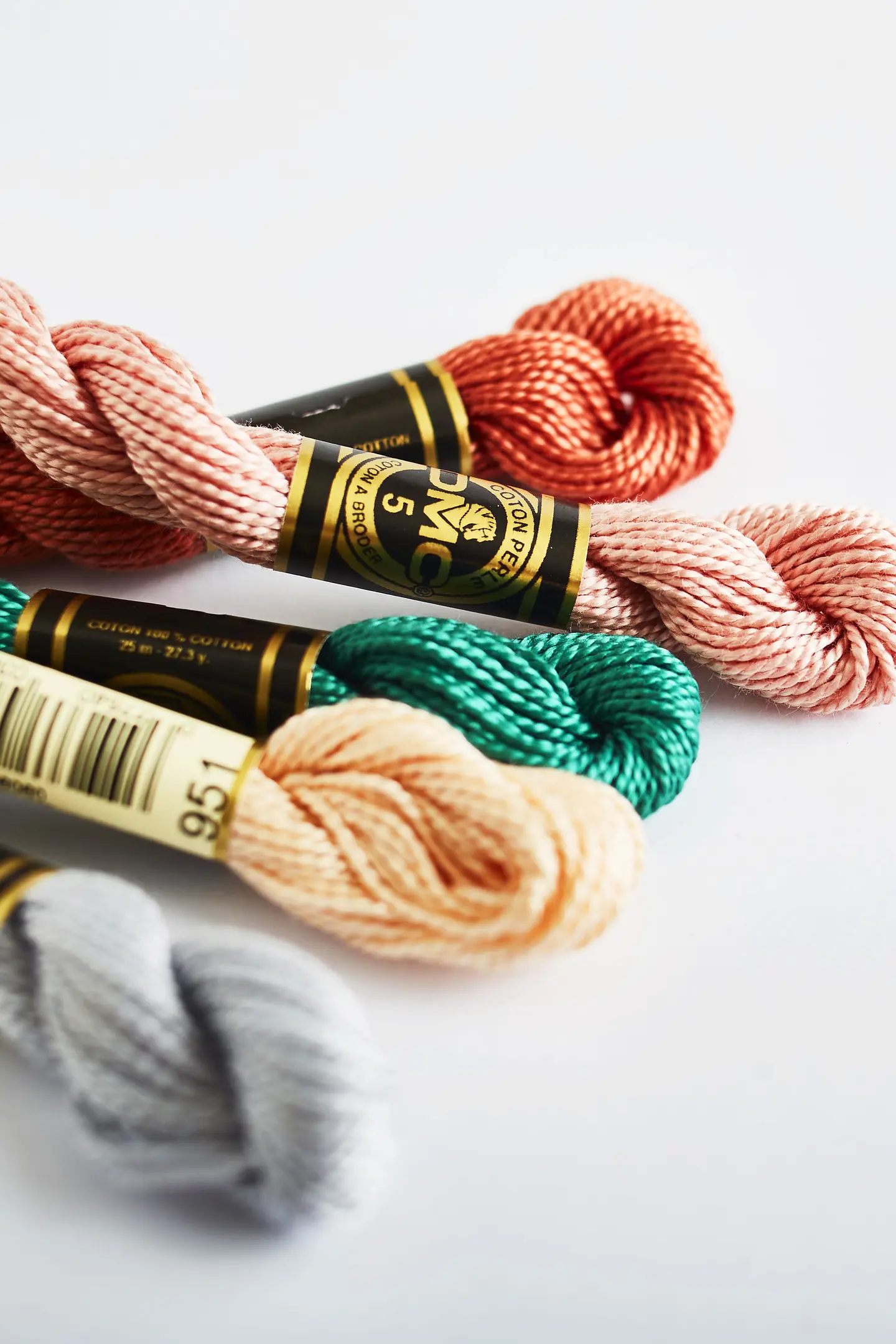
Beyond the high-quality materials in the kits, the single greatest asset you’re buying into is the color system itself. Those little numbers on every skein are the universal language of embroidery.
DMC has been producing these colors for over a century, and their dye-lot consistency is legendary. This means the “310” (black) or “742” (a nice tangerine) you buy today will be the exact same shade as one you bought five years ago. For a large, complex project that takes months or even years, this is non-negotiable. You can run out of a color and confidently buy a new skein, knowing it will match perfectly.
This numbered system is what connects the entire crafting community. When you buy a pattern from an independent designer on Etsy, it will come with a chart that lists “DMC 415” or “DMC 907.” You know exactly which colors to get. This simply isn’t possible with no-name brands.
An Investment in Your Craft
A single skein of DMC floss is an incredibly affordable luxury, often costing less than a cup of coffee. The real cost comes from using cheap, off-brand thread. The frustration, the tangled knots, the fuzzy stitches, and the hours wasted are a “false economy.” When you’re pouring 20, 50, or 100 hours into a piece, you deserve to work with materials that respect your time.
DMC is more than just thread. It’s a reliable, consistent, and high-quality foundation that lets your own skill and creativity shine. It’s the one part of your craft you should never have to worry about.