





Table of Contents:
Winter shifts outdoors put footwear through conditions summer boots never face. Rain, slush, and dropping temperatures all test how well winter safety boots keep feet dry, protected, and comfortable for a full day on site. Safetybrands builds a range of steel toe cap trainers and boots designed around that balance between protection and comfort when conditions turn cold and wet.
Why Winter Work Requires Specialized Safety Footwear
Cold weather shifts bring hazards that standard trainers are not built to handle. Ice, standing water, and falling temperatures all affect grip, insulation, and how long a steel toe cap stays comfortable against the foot. Winter safety boots have to manage moisture while still meeting the impact and compression standards expected of everyday work footwear.
Outdoor roles in construction, logistics, and warehousing often mean long hours on hard, cold ground. That kind of exposure calls for soles and linings suited to the season rather than a single style covering every condition. Safetybrands addresses this by building water resistance and breathable linings into several of its steel toe cap lines rather than treating winter as an afterthought.
Water-Resistant Protection in the Safety Air Trainer Range
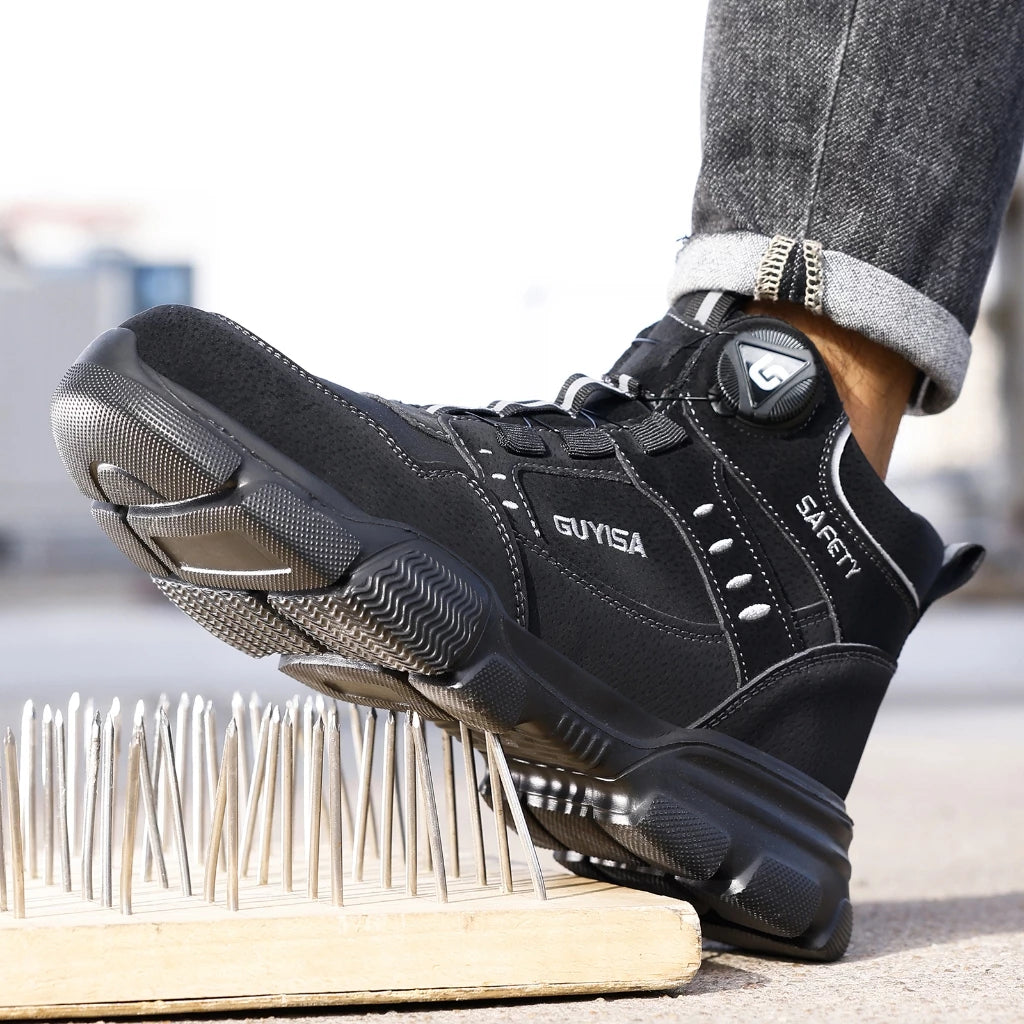
Several models across the Safetybrands catalogue, including the Safety Air Trainer Style 50 and Style N30, list water resistance as a standard feature. This matters most on wet pavements, muddy yards, and sites where puddles and slush are routine. A water-resistant upper helps keep the superior middle sole and lining dry during a full shift outdoors.
The Style N17 Air Trainer and the N31 and N31A boot styles carry that same water-resistant build, each paired with a standard steel toe cap and a mesh and fabric lining insole for the lining underneath. That pattern of water resistance sitting alongside certified toe protection runs through the trainer and boot styles rather than being limited to a single flagship product.
Breathable Design Across Safety Brands’ Steel Toe Cap Models
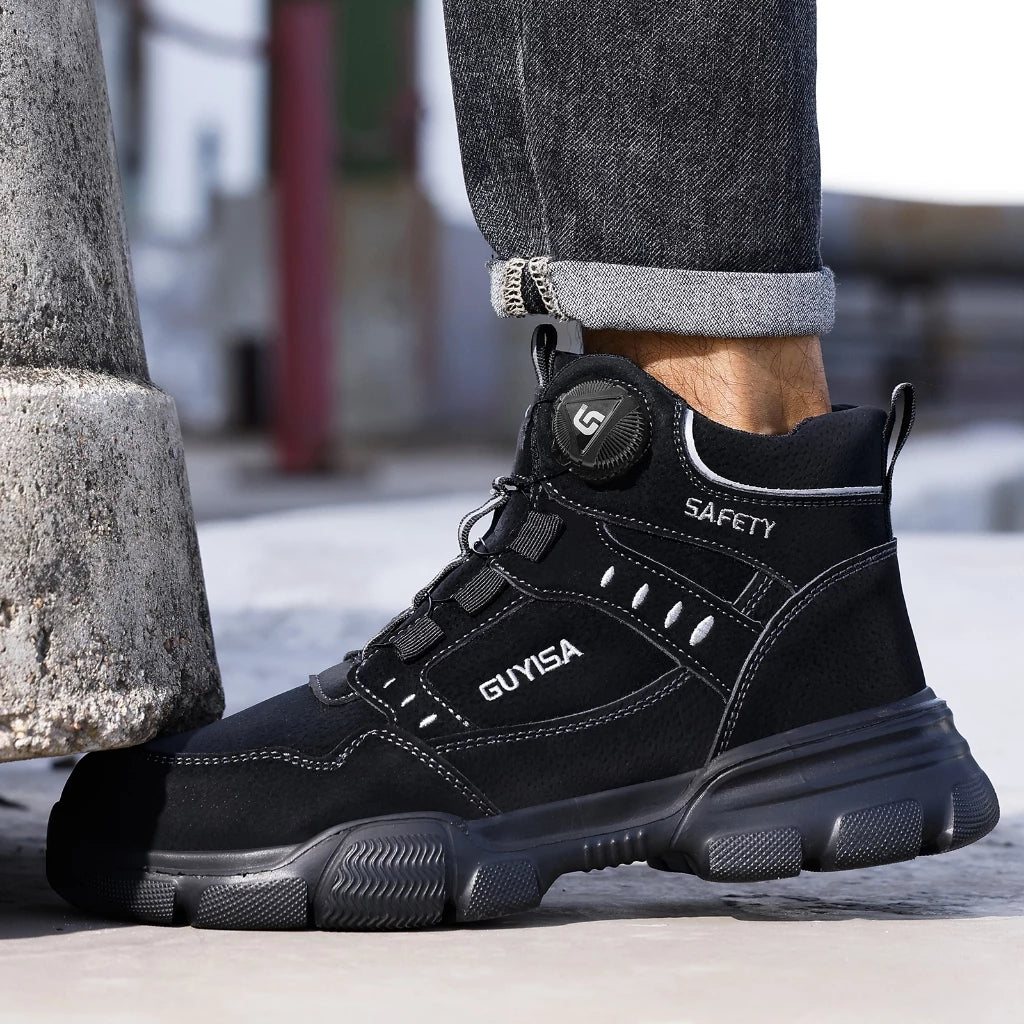
Breathability sounds like a summer concern, but it matters just as much in winter. Feet that stay damp from sweat inside a sealed boot can feel colder, not warmer, over a long shift. Many Safetybrands trainers use a fly knit breathable upper paired with a mesh and fabric lining insole to let air move while still blocking the elements.
The Style A50 Safety Trainer is described on the site as lightweight, breathable, and air cushioned, placing it among the more ventilated options in the range. The N30 and A75A styles extend that same fly knit breathable upper into a water-resistant build, showing how the two features are engineered to sit together rather than as separate add-ons.
Anti-Smashing, Anti-Pinching, and Anti-Puncture Features for Winter Hazards
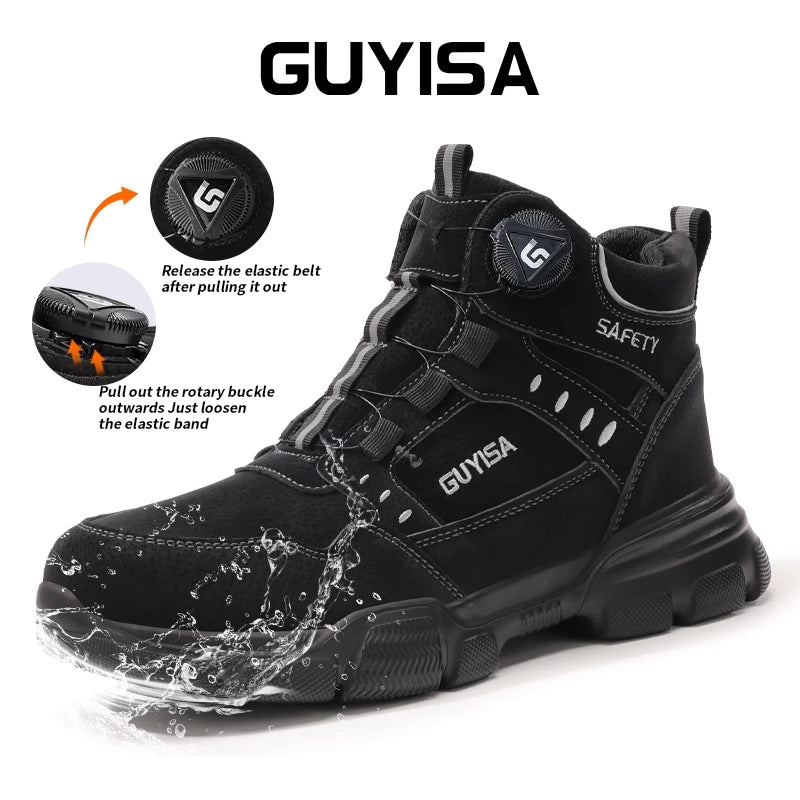
Winter job sites bring their own set of hazards beyond slippery ground. Falling tools, sharp debris hidden under snow, and tight spaces around machinery all raise the risk of crush or puncture injuries. Several Safetybrands styles, including the Style 91 and Style 101 trainers, are listed with anti-smashing, anti-pinching, and anti-puncture protection built into the construction.
These features sit alongside the standard steel toe cap and a superior middle sole, forming a layered approach to protection rather than relying on the toe cap alone. For anyone comparing boots, this combination of protections is one of the more concrete details worth checking on a product listing.
UKCA and CE Certification: Winter Safety Standards Explained
Certification is where claims about safety footwear get tested against an actual standard. Safetybrands states that its trainers and boots are UKCA and CE certified, with many styles rated to EN ISO 20345 SBP SRA. That rating covers personal protective equipment requirements including the steel toe cap, sole properties, and puncture resistance.
Styles such as the N23, N24, and N01A boots are described as compliant with British Standard SBP SRA, which places them within the same certified category as the trainer range. For anyone prioritising winter safety boots, a recognised certification mark is a more reliable indicator than appearance alone, and the brand notes directly that similar-looking shoes do not always carry the same compliance.
Lightweight Comfort for Extended Cold-Weather Shifts
Heavy boots can wear down a worker over a long shift, especially outdoors in the cold. Safetybrands markets its trainer and boot styles as lightweight, and customer reviews referenced on the site echo that, describing the steel toe cap shoes as very light and comfortable to wear.
Sizing across styles such as the N23 and N24 boots is listed in centimetres, from 25.5cm (UK7) up to 29cm (UK11), with a note that sizing runs generously. That detail matters for anyone ordering winter safety boots without the chance to try them on first. Safetybrands also ships from a Midlands warehouse using a free 24-hour tracked delivery service, with orders placed before noon generally arriving within one working day.
- Water resistance helps keep the foot dry through wet, slushy, or icy conditions on site.
- Breathable fly knit uppers and mesh linings allow airflow even when the boot or trainer is sealed against moisture.
- A standard steel toe cap tested to EN ISO 20345 provides the core impact and compression protection.
- Anti-smashing, anti-pinching, and anti-puncture construction adds protection beyond the toe cap itself.
- A lightweight build supports comfort across long outdoor shifts in cold weather.
Winter conditions test footwear differently than a summer shift does, and that is exactly where the details above come into focus when assessing winter safety boots.